
Conveyor Pulley and Idler Lagging
Worn pulley lagging and grooved idlers rebuilt and relagged so the belt drives without slip, no replacement pulleys.
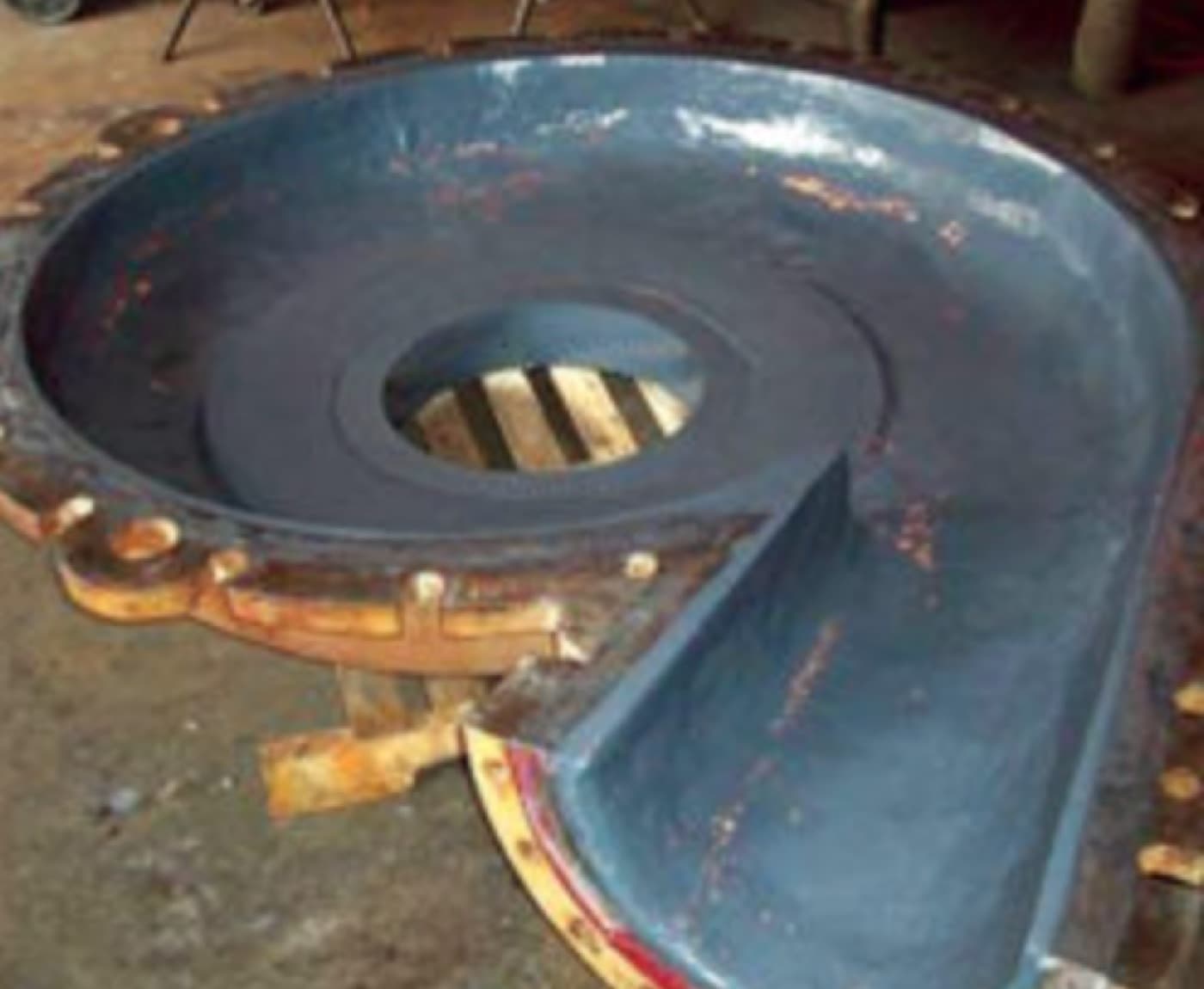
A job completed with Belzona. This describes what the Belzona system does and how it goes on, not a record of a specific project by this distributor.
The challenge
On a bulk conveyor, the drive and bend pulleys carry the belt on a layer of lagging that has to stay rough enough to grip. As that lagging wears smooth, the pulley loses its hold on the belt and the belt starts to slip, especially under load. The idlers run into the same trouble from a different direction: the belt and the carryback wear the rolls flat and cut grooves into the faces, so the rolls no longer turn round and the belt tracks off line. Once the belt slips and wanders, it spills material, frays at the edges, and drags the whole line down with it. The usual fix is to pull the pulleys and idlers and wait on replacements, which keeps the conveyor down longer than the plant can afford.
The Belzona approach
The pulleys and idlers are taken as found, and the metal is worked first. On the pulley shells the worn lagging comes off and the surface is blasted back to sound, profiled metal, then any spots where the shell has lost profile are rebuilt so the new lagging sits true. Over that goes a tough cold-applied elastomer lagging that grips the belt and stands up to the abrasion coming off the material. On the idlers the grooved and flattened faces are built back up to a round profile and protected against the carryback that cut them in the first place. Everything is done cold, so there is no hot work on the shells and no waiting on new castings, and the conveyor goes back running true.
- Assess the drive trainThe drive and bend pulleys and the idlers are inspected to see where the lagging has gone smooth and where the faces have worn flat or grooved.
- Strip and blast to sound metalThe old worn lagging is removed and the pulley shells and idler faces are grit-blasted back to a clean, profiled surface so the rebuild and lagging bond.
- Rebuild lost profileCold-applied composites rebuild any lost shell profile and bring the grooved idler faces back up to round, with no hot work on the rolls.
- Apply elastomer laggingThe pulley shells are lagged with a tough elastomer that grips the belt, and the rebuilt idler faces are protected against the carryback that wore them.
- Return to serviceThe lagging cures and the profile is checked, then the conveyor returns to service so the belt drives true without waiting on replacement pulleys.
The result
- Pulley shells relagged with a tough, gripping elastomer instead of being replaced
- Grooved and flattened idler faces rebuilt back to a round profile in place
- Belt drives without slip and tracks on line, with the carryback wear addressed at the faces
- Conveyor returned to service without waiting on new pulleys, by factory-trained and factory-certified Belzona applicators
In the field
More Mining, Quarrying & Bulk projects
Chute & Hopper Erosion Lining
Worn chutes, hoppers, and slurry pumps rebuilt and lined with impact- or abrasion-resistant systems matched to the wear.
Apron Feeder Wear Plate Shimming
Uneven wear plates shimmed with cast conforming backing to stop the pounding, then lined for abrasion where the material rides.
Crusher Pump Volute Abrasion Lining
Worn slurry pump volute rebuilt and lined along the wear path with an abrasion-resistant composite matched to the feed, no new casting required.
Seeing something like this?
Belzona Houston is the authorized Belzona distributor for South Texas and the Gulf, based in Alvin, Texas, we’ll survey your equipment and recommend the right cold-applied Belzona system, with 24-hour support.